Mariana Chapouto Lopes is a dual-degree student, pursuing both a Master of Science (MS) from the University of Michigan’s School for Environment and Sustainability and a Master of Business Administration (MBA) from U-M’s Ross School of Business. But this was not her original plan. When first considering graduate schools, Lopes, who is from São Paulo, Brazil, notes she was “not originally thinking about an MBA.” It turns out, a business degree focused on sustainability “is exactly what I wanted and exactly what I needed,” she said.
Lopes is involved in both of WDI student engagement programs: the International Investment Fund (IIF) and the Multidisciplinary Action Projects course (MAP), which she completed with a team of first-year Ross MBA students this spring. (The complete list of WDI-supported MAPs for the 2025-26 academic year can be found below.) The IIF, founded with support from WDI and managed as a graduate student course, leverages private capital to address pressing social and environmental challenges in emerging markets.
Lopes reflects on how these experiences have shaped her career trajectory and where she sees herself making the most impact.
Q: How did you first learn about WDI?
Lopes: I’m very intentional about the activities I get involved with – I want to be strategic and put my energy into projects and skills I know I’m going to apply, be passionate about, and that have the potential to create tangible, lasting impact by addressing pressing environmental and social challenges. So when I joined the MBA program, the only initiative I became involved in was the International Investment Fund (IIF), which has a strong partnership with WDI. During that time, IIF’s management team mentioned WDI was creating a new initiative focused on emerging markets, startups, and investors. I didn’t think twice — I just signed up.
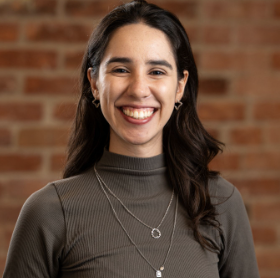
I don’t have a financial background — my undergraduate studies weren’t in finance – so I’ve been very deliberate about building that through the fund and WDI. I’m also really drawn to WDI’s focus on emerging markets and its approach of not just producing content, but making things happen concretely.
Q: Tell us about Powertrust, the focus of your MAP team. What was the core challenge you were trying to solve?
Lopes: Powertrust operates a transaction infrastructure that connects multinational corporates that have climate targets with a network of renewable energy developers across emerging markets. They are in the process of launching a new catalytic climate finance facility – essentially a fund to provide upfront capital to solar projects. They already have established connections with multinational companies like Microsoft, Netflix, and Salesforce, and these companies have emissions goals around their energy use that they want to lower – they pay Powertrust to purchase environmental credits from these solar plants. So there’s demand from the market, and at the same time, Powertrust has developed strong relationships with many renewable energy project developers across the 25 countries they operate in today.
While Powertrust’s existing commercial arrangements are material to solar projects being built and remaining viable, it doesn’t address an acute challenge that developers often face at the first stage of a project – how to finance the CapEx (capital expenditure). And normally, Powertrust’s infrastructure issues environmental credits and sells them to companies after they are generated – after which the solar developer receives the proceeds. To accelerate project deployment, and to help bridge this upfront capital gap, Powertrust is looking to launch this new facility.
So what Powertrust is doing is connecting with investors, such as international organizations and development finance institutions (DFIs), to mobilize investment capital toward solar developers. The developers then use this capital to secure debt financing, build new projects and generate renewable energy certificates (RECs), which are sold to multinationals. The proceeds from this sale are what is used by the facility to pay back investors. Throughout the MAP project, we developed a financial model focused on understanding interest rates and repayment dynamics within the financing structure, how much capital the facility can forward to developers, among many other variables.
We were also looking at the bigger picture of the renewable energy market, not just one specific aspect of it. We had two scopes: A market assessment and stakeholder interviews to understand the landscape, and then the financial model itself, which was our main focus.
“I don’t think any other university has an organization like (WDI). That’s why it’s really special, I truly value it and am very thankful for it.”
—Mariana Lopes, 2027 MBA candidate
Q: What was it like working with your MAP team?
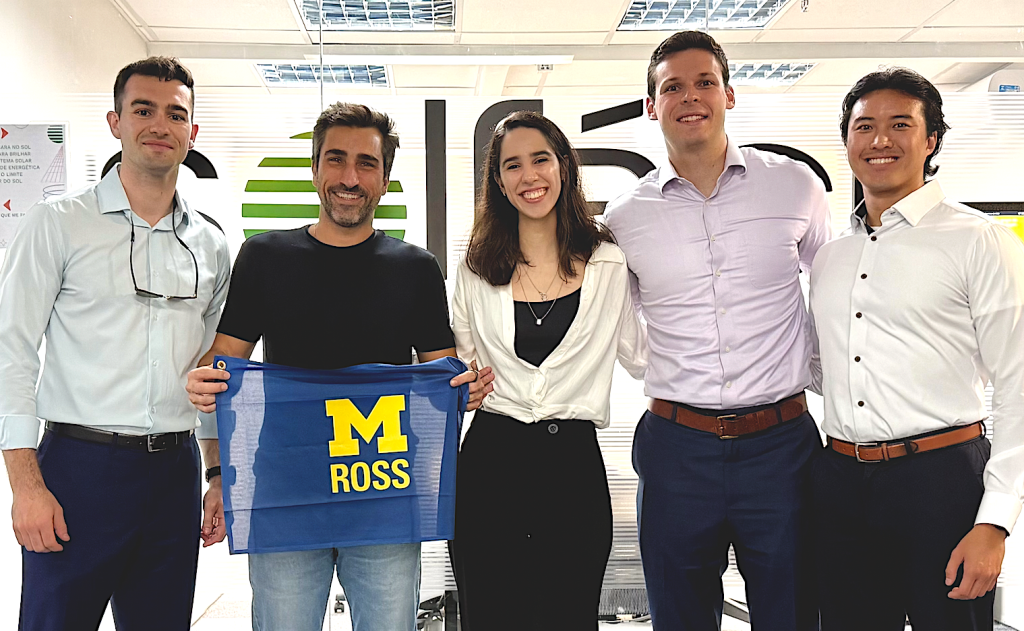
Lopes: My group was very special; I would say unique. We started as a team, but over time became a group of friends focused on working through the challenge together and building something meaningful. We preferred in-person meetings over virtual and met every day. When you think about a financial model, you picture one person sitting there looking at numbers. Our project was exactly the opposite. We discussed every part: what we should do, what barriers exist. And in this case, our client wouldn’t give us answers because they wanted us to learn how to do it ourselves. This helped us truly learn and build solutions from scratch. Powertrust was the perfect partner, providing guidance without giving us answers, and encouraging us to work through the problem independently.
For me, this was the most important part of our journey. When working in emerging markets, challenges are often structural and cross-cutting, shaped by limitations and uncertainties across multiple dimensions. You need to bring together people with different perspectives and backgrounds, people who are willing to question assumptions and move through discomfort in order to arrive at solutions that actually work.
Finally, being back in Brazil, my home country, and hearing all the stakeholders speak about their challenges while reflecting on how Powertrust could be solving them, was really something. We are deeply grateful to WDI for making this experience with Powertrust possible.
Q: You’ve also had a role in the WDI-supported International Investment Fund, and in your second year of the MBA program, you will lead the organization as Managing Director. What has this meant for you, and where do you see the IIF moving?
Lopes: Stepping into the role of Managing Director of the International Investment Fund is more than an academic and professional achievement for me; it is deeply connected to my purpose as an individual. Coming from Brazil and witnessing the challenges faced by founders in emerging markets has motivated me to help build and strengthen structures that support innovators, their ambitions, and their impact.
The IIF’s previous management team did an outstanding job launching the new value creation program, which supports founders in addressing specific challenges they face. One of my main goals is to further strengthen this program through a structured ecosystem engagement strategy and pipeline development, leveraging our network of partners, IIF members, and founders. Another priority is to better utilize the knowledge and expertise of our Impact Associate Investors while empowering them to develop new skills and pursue the areas they are most passionate about. I also aspire to place greater emphasis on individual interests and professional development, creating opportunities for team members to build skills in the areas they care most about while ensuring we continue delivering high-quality projects. Lastly, I will focus on positioning IIF as a fund that creates meaningful value for both founders and investors within the broader U-M ecosystem, while expanding awareness of and interest in emerging markets innovation and investment opportunities across the university community.
Q: You came to Michigan through the sustainability program before adding the MBA as a dual degree. What made this experience meaningful to you?
Lopes: I chose the University of Michigan because of its strong and well-established MS in Environment and Sustainability, with professors whose work aligned closely with my professional experience and passions: waste management, circular economy, sustainable urban development, and systems thinking. At the time, my goal was to deepen my expertise in these areas and build a more technical foundation of the environmental challenges I had been working on professionally. However, as I progressed through the program, I began to realize that addressing these challenges also required an understanding of the financial and strategic mechanisms that enable solutions to scale, a gap I had witnessed throughout my previous professional experiences.
I arrived in 2024, and by the end of the year, I decided to apply to the Dual Degree Program. After being admitted, I began the MBA program in August 2025, joining the Erb Institute.
I would say WDI was the initiative that really tied everything together. I truly believe I came to Ross to see the IIF happening, to meet WDI, because it’s the perfect mix of what I want to work on: emerging markets, sustainable development finance, impact investing, and public-private partnerships. I don’t think any other university has an organization like this. I haven’t found one. That’s why it’s really special, I truly value it and am very thankful for it.
WDI-supported Multi-disciplinary Action Projects for the 2025-26 academic year:
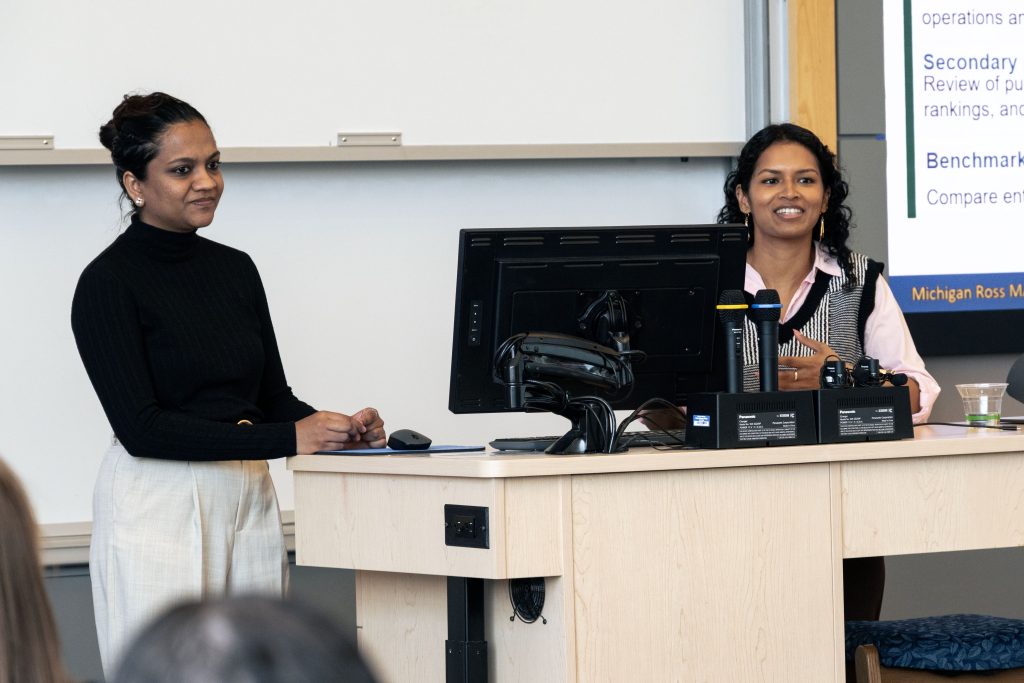
Meghalaya Basin Development Authority (MBDA) – Meghalaya, Northeast India
The Meghalaya Basin Development Authority is a 13-year-old NGO with 1,300 employees, focused on sustainable livelihoods and entrepreneurship in Meghalaya — a region of exceptional ecological and cultural wealth historically constrained by geography, limited industry, and dependence on traditional economic activities. Student teams designed interventions to strengthen the state’s entrepreneurial ecosystem, with a primary focus on operations and a secondary focus on market analysis. Students conducted field research across Meghalaya’s districts, engaging local stakeholders to identify barriers and practical solutions.
Team: Masa Dutta, Varsha Dyavaiah, Pratyu Medikonda, Sadyasnata Pattanaik
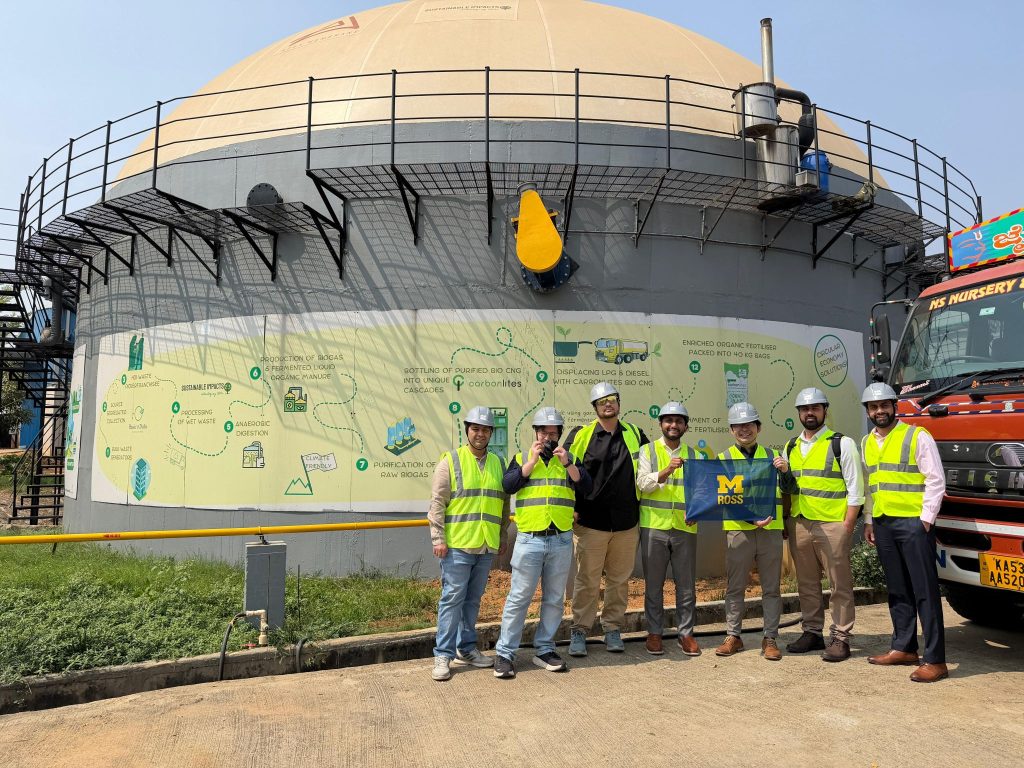
Ostara Advisors – Bengaluru, India
Ostara Advisors is a climate-tech investment banking firm, having directed over millions in climate capital into the Indian market while bringing first-time global investors to the country. Student teams conducted a deep dive into India’s climate-tech startup ecosystem across four sectors: industrial decarbonization, circular economy, materials innovation, and climate-smart agriculture, as well as building sector-specific investment theses and supporting Ostara’s deal flow. Work was structured across two streams: ecosystem mapping and strategic positioning, followed by a sector deep dive and investor go-to-market strategy.
Team: Glen Bredin, Gurashish Grewal, Noah Kanumilli, Milan Patel, Luqmaan Taha Siddiqui
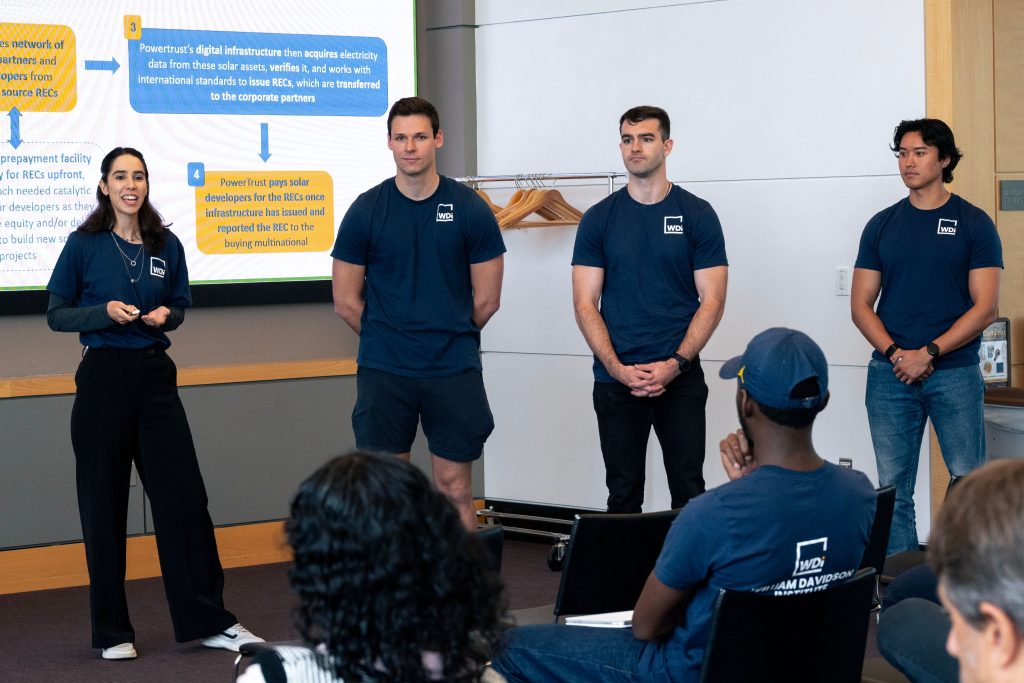
Powertrust – Brazil
Powertrust is a startup working to accelerate renewable energy development in emerging markets through catalytic climate finance. The company connects multinational corporations seeking to offset emissions with renewable energy project developers in Brazil who lack upfront capital, using Renewable Energy Certificates as the transactional mechanism. Student teams built a financial model capturing the economics of this fund structure – including interest rates, investor returns, and developer repayment terms – and conducted a market assessment of Brazil’s solar financing landscape.
Team: Anthony Bergren-Salinas, Matt Kind, Mariana Lopes, Xander Rodriguez, Mikey Shin.
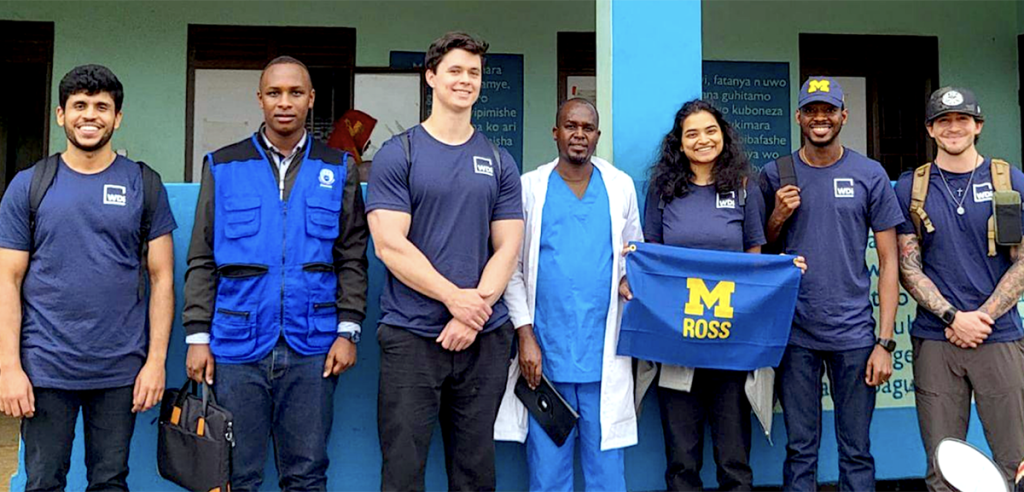
Society for Family Health (SFH) Rwanda – Kigali, Rwanda
Society for Family Health Rwanda is a 13-year-old, mission-driven nonprofit with 100 employees working to expand healthcare access across Rwanda. Student teams developed a scalable financial model for community health posts, drawing on SFH Rwanda’s Nurse Entrepreneurship and Public-Private Partnership frameworks. Students analyzed revenue streams, cost structures, and partnership models to help SFH determine how nurse-led health posts — serving communities of roughly 450 people — can become financially self-sustaining without compromising care quality.
Team: Jed Arend, Yemi Fajimi, Sebastian Ken, Kanika Pillai, Kushagra Bhatt
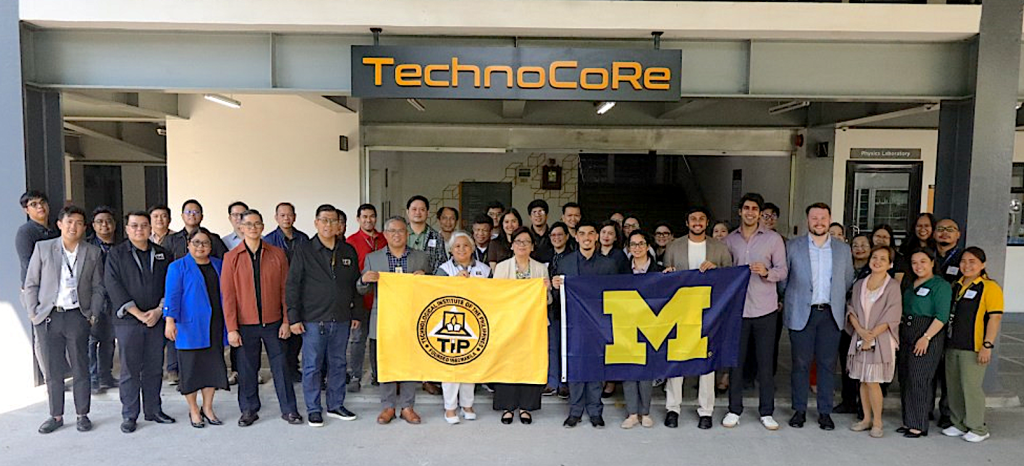
Technological Institute of the Philippines (TIP) – Manila, Philippines
The Technological Institute of the Philippines is a 63-year-old educational institution with roughly 1,000 employees. Student teams helped develop a three-year strategic plan for its research and innovation arm, TIP TechnoCoRe — assessing current capabilities, estimating potential revenue generation and cost savings, and identifying opportunities for growth through international and domestic partnerships.
Team: JP Bongco, Parnika Tandon, Ajith Vimala Indira, Cooper Wick, Sanjeet Choudhary Kakarla