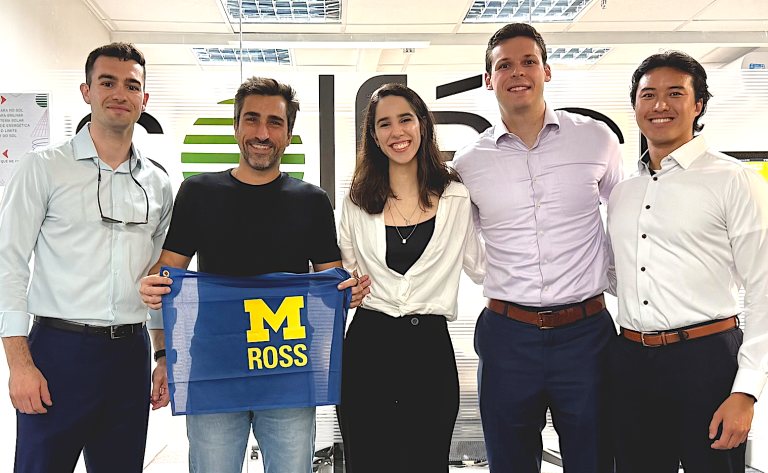
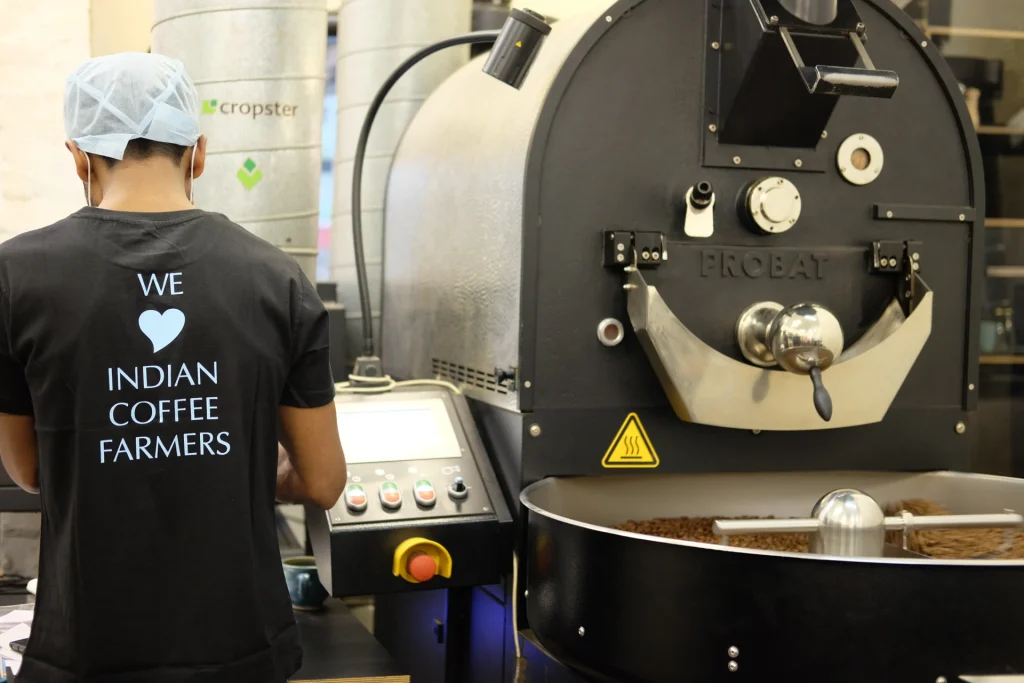
Founded in New Delhi in 2013, Blue Tokai Coffee Roasters grew from a home-kitchen roasting experiment into India’s largest homegrown specialty coffee chain. Its secret brew? An economic equation in the form of a 500–600 square foot café, profitable in under four months. This was the compelling plot of the winning case study in the 2026 Entrepreneurship in Emerging Markets Case Writing competition from WDI Publishing.
This year’s competition was co-sponsored by the University of Michigan’s Zell Lurie Institute for Entrepreneurship (ZL), and is one of over 12 annual competitions administered by WDI Publishing.
Authors submitted a competition record of 57 final cases, beating the previous high of 52. A total of 109 authors representing 24 countries participated, also breaking past records. Sixty of the authors and co-authors represented colleges, universities and other higher education institutions.
The primary goal of this competition was to place students in the shoes of protagonists who are facing pivot points in their enterprises’ journey toward profitability, scale and sustainability. The winners received cash prizes in addition to the publication of their cases.
“Entrepreneurs are problem solvers. And entrepreneurs in emerging markets face some of the most challenging business environments in the world,” said Sandra Draheim, Manager of WDI Publishing. “ZLI’s co-sponsorship made it possible to turn these entrepreneurs’ experiences into case studies that business educators and students can actually use in the classroom.”
Sarika Gupta, managing director of ZLI and lecturer of business administration at Michigan Ross, said the competition elevates case studies that put a name and a face on the work of entrepreneurs unlocking opportunities in some of the world’s toughest markets. “When students step into an entrepreneur’s shoes and wrestle with the same hard tradeoffs, that’s how an entrepreneurial mindset actually takes shape,” Gupta said.
The Winners
First Place ($5,000):
Case Title: Blue Tokai Coffee Roasters: Riding the Third Wave
Case Description: Founded in New Delhi in 2013, Blue Tokai Coffee Roasters grew from a home-kitchen roasting experiment into India’s largest homegrown specialty coffee chain. The founders must choose their growth engine: the proven small café (500–600 square feet), profitable in three and a half months and scalable at 80–90 outlets per year, or the new 2,000-square-foot “Origins” format, experientially richer but capital-intensive and unproven at scale.
Authors: Sonia Mehrotra, Dean – CECD & Strategic Initiatives, Prin. L.N.Welingkar Institute of Management Development and Research, India. Ram Subramanian, Professor of Leadership, Stetson University, U.S.
Second Place ($3,000):
Case Title: Restart Academy: Serving Second Chances
Case Description: This case follows a business consultant and entrepreneur who became CEO of Restart Academy, a social enterprise launched by the Thailand Institute of Justice to support formerly incarcerated people through training and employment in food, hospitality, and related services.
Author: Krittinee Nuttavuthisit, Associate Professor, Sasin School of Management, Chulalongkorn University, Thailand
Third Place ($1,000):
Case Title: Riders for Health: Which Road to Scale?
Case Description: Riders for Health, an organization active in several African nations, aims to systematically bridge the transportation gap between healthcare providers and rural populations’ medical needs. Now, in The Gambia, after more than two years of negotiation, a $3.5-million bank loan backed by a foundation’s deposit has enabled Riders for Health to buy its own new motorcycles. For the first time in Riders’ two-decade history, the organization owns a national health fleet outright. But how should it grow?
Authors: Octavio Caunedo, Ph.D. Student, Rice University; Alessandro Piazza, Associate Professor for Strategic Management, Rice University, U.S.
Judging the Cases
The judges for this competition are leaders in academia, business development, business curricula and pedagogy. Each case was reviewed through a double blind process.
“It was a privilege to review this year’s submissions…I found a consistently high standard of storytelling, relevance, and thoughtful exploration of entrepreneurial and leadership dilemmas,” said Nneka Okekearu, Director, Enterprise Development Centre at Pan-Atlantic University in Lagos, Nigeria. “The diversity of contexts and the quality of the narratives were particularly encouraging.”
“These amazing (case authors) have distinguished themselves in how clearly and articulately they understand the impact of the problems and the solutions they’re proposing,” said Chukwuemeka Okeke, Senior Programmes Coordinator for LEAP Africa, based in Lagos, Nigeria.
The full panel of judges included:
- Rose A. Dodd, Executive Director of The Education Collaborative, a pan-African initiative launched by Ashesi University in 2017. Dodd leads the peer-driven network that has engaged over 400 institutions across the continent.
- Gautam Kaul, Professor of Finance at the University of Michigan’s Ross School of Business, holds a master’s in economics from the Delhi School of Economics, and Ph.D.s from the Indian Institute of Management, Ahmedabad and the University of Chicago’s Booth School of Business.
- John Lafkas, Senior Editor, Cases and Pedagogy at Harvard Business Impact, formerly Harvard Business Publishing.
- Chukwuemeka Okeke, Senior Programmes Coordinator at LEAP Africa, where he leads entrepreneurship and social innovation portfolios, including the Social Innovators’ Programme & Awards.
- Nneka Okekearu, Director of the Enterprise Development Centre (EDC) of Pan-Atlantic University in Nigeria, where she leads initiatives that strengthen entrepreneurship education, expand market access for small businesses, and advance women’s economic empowerment across Africa.
- Ruth N. KIRAKA, Associate Professor of Management (Strategy and Entrepreneurship) at Strathmore University, in Kenya. She is a researcher, trainer, consultant and certified professional mentor and coach.
Established in 2007, WDI Publishing is an initiative of the William Davidson Institute at the University of Michigan, delivering business case studies to universities globally.