By Diana E. Páez, Senior Director, Energy & Mobility and Dana Gorodetsky, Program Manager Energy & Mobility
Emerging markets are increasingly playing a major role in the global energy transition, especially when it comes to mobility. New policies, bold investments, and a wave of innovative electric mobility startups are reshaping how people and goods move across Africa, Asia, and beyond — impacting every vehicle segment, from two-wheelers to trucks.
An exemplar of this transformation is Wahu Mobility, the first Ghanaian company to design and produce EVs tailored specifically to the African context. Founded in 2020, Wahu operates as an original equipment manufacturer. The manufacturer and retailer of its own line of electric vehicles in Ghana, Wahu began with cargo e-bikes and today is advancing on plans for electric three-wheelers and cars built to handle African roads and markets. Most of Wahu’s customers are urban delivery riders. E-bikes offer a fast and nimble form of transportation, with a competitive value proposition compared to internal combustion engine motorcycles.
For the past three years, WDI and Wahu have built a dynamic, multi-faceted collaboration — one that blends research, education, market analysis, and long-term strategic vision. This strategic partnership, which continues into 2026, offers an opportunity for mutual knowledge building and sharing, not only for an emerging market startup, but also for university business students, business professors, fellow entrepreneurs and investors.
Building Knowledge: A Business Teaching Case Study
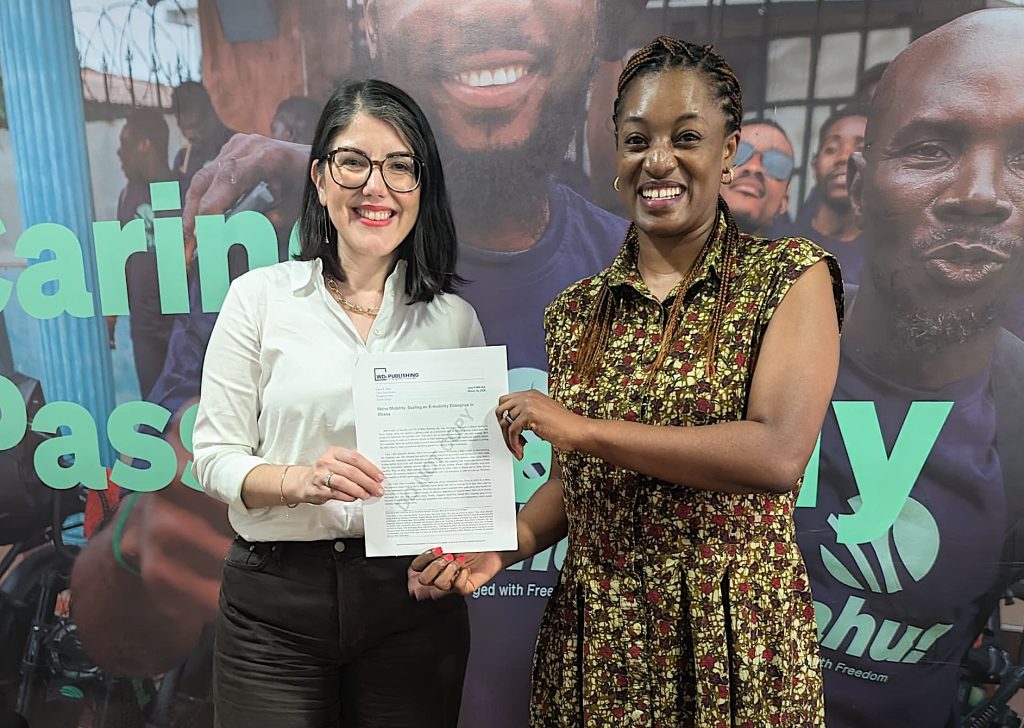
As part of the collaboration, WDI, the University of Michigan Ross School of Business and Wahu co-developed a business teaching case study. The case, “Wahu Mobility: Scaling an E-mobility Enterprise in Ghana,” offers a rich portrait of EV production and adoption in emerging markets — and specifically in Ghana, which launched a national EV policy in 2023 — while centering on Wahu’s business journey.
Published in 2026, the case digs into the strategic questions at the heart of Wahu’s growth: how to localize its supply chain, how to drive higher lifetime value for e-bike customers relative to both electric and gasoline-powered competitors, and how to navigate critical decisions around battery chemistry and evolving business models. Diana Páez, WDI Senior Director of Energy & Mobility, conducted fieldwork in Accra, Ghana that forms the empirical foundation of this case. A follow-up trip and additional research have provided depth and context.
The case is now available through WDI Publishing to business schools around the world.
“We hope universities across Ghana and the region will consider adopting this case. It speaks directly to the local context, involving a forward-looking start up company that the next generation of business leaders can learn a lot from.”
— Diana Páez, Senior Director of Energy & Mobility, WDI
Driving Market Insight: A Student Project in Kigali
Scaling a startup across diverse and complex African markets requires more than vision — it demands rigorous, on-the-ground analysis. WDI sponsored a University of Michigan Ross Multidisciplinary Action Project (MAP) team to support Wahu in exactly this way. In early 2024, a team of four MBA students traveled to Kigali, Rwanda, to evaluate the city as a potential new market for Wahu’s expansion.
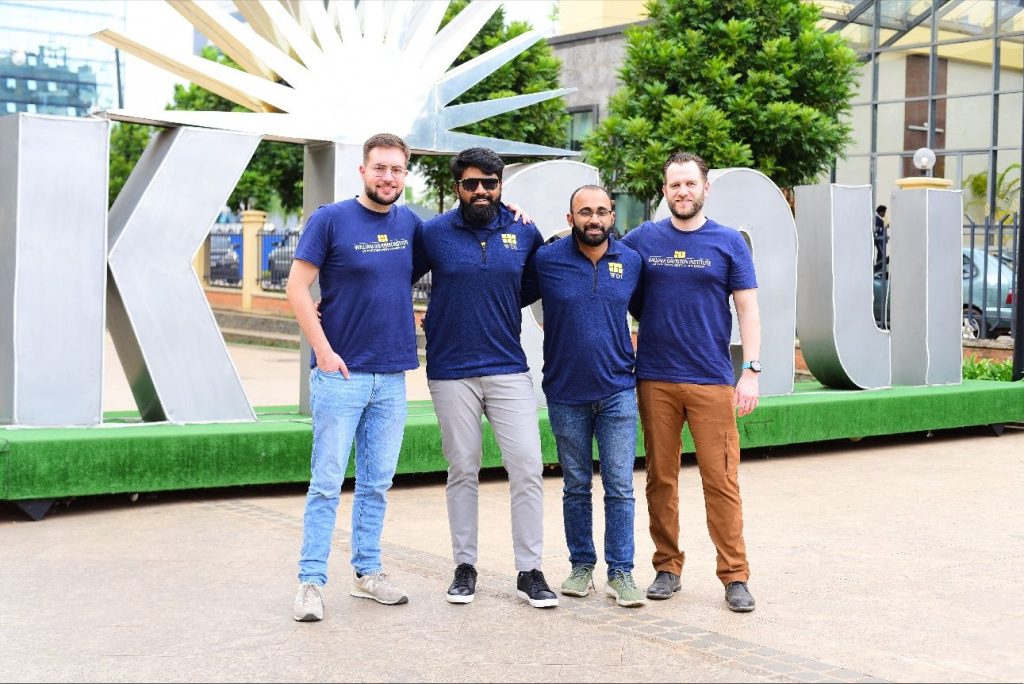
The students developed a comprehensive market analysis and market entry strategy, then presented their findings in person to Wahu CEO Valerie Labi, who traveled to Ann Arbor in April 2024. The project gave Wahu fresh data, independent analysis, and a new perspective on what scaling into East Africa could look like.
“The U-M students prepared an incredibly valuable analysis for the Wahu team and gave us a lot of data and a fresh perspective for us to consider as we move forward in the next stage of growth for Wahu.”
— Valerie Labi, CEO, Wahu Mobility
Building Networks: A Michigan Visit That Opened Doors
Labi’s visit to Michigan in 2024 extended well beyond the MAP presentation. She delivered a widely attended public talk on the University of Michigan campus — “How an E-Bike Startup Is Looking to Change the Way Africa Moves” — in which she shared her entrepreneurial journey, illuminated the landscape of sustainable innovation in Africa, and described how Wahu is learning and adapting at every stage of its growth.
During her time in the region, Labi also met with many players in Ann Arbor and Detroit’s vibrant innovation and mobility ecosystems — exchanging lessons, exploring shared challenges and opportunities, and laying the groundwork for future collaborations between Ghana and Michigan.
“Experiencing the energy and connection of the Michigan ecosystem, and being able to share what we’ve learned and learn from others, was incredible. Though we are in different worlds in some sense, there are some clear parallels and opportunities for us to work with different actors in Michigan to push our business forward.”
— Valerie Labi, Wahu
Looking Forward: Co-Developing a Mobility Innovation Center in Ghana
Perhaps the most ambitious dimension of the WDI–Wahu collaboration is still taking shape. The two organizations are jointly laying the groundwork to catalyze a collaborative network to advance electric mobility training, innovation and commercialization in Accra. By combining WDI’s expertise in private sector development in low- and middle-income countries with Wahu’s pioneering work on the ground, and connecting local players such as universities and ecosystem actors, this network aims to accelerate Ghana’s transition to sustainable mobility.
This initiative reflects a shared belief that Africa’s EV future will not be imported — it will be homegrown, and leaders like Wahu can play a catalytic role in that process.
A Partnership That Models What’s Possible
The WDI–Wahu collaboration is a compelling example of what can happen when a nonprofit organization and a startup work together across the full spectrum of their capabilities — from classroom to boardroom, from campus to continent.
“Our work with Wahu is a great example of the many different tools that WDI can leverage to support energy and mobility enterprises in low- and middle-income countries. From developing the case study to supporting students as they advised on go-to-market strategy, this effort is building stronger ties between Ghana and Michigan. We are excited to see where our journey with Wahu continues.”
— Diana Páez, WDI
As electric mobility continues to evolve — and as Africa emerges as an increasingly important arena for that evolution — partnerships like this one create additional opportunities to support vibrant ecosystems in emerging markets, which is core to WDI’s mission.