The Balanced Design, Monitoring, Evaluation, Research, and Learning (BalanceD-MERL) consortium is a mechanism under the U.S. Global Development Lab’s Monitoring, Evaluation, Research, and Learning Innovations (MERLIN) program at the United States Agency for International Development (USAID). The consortium believes good program management integrates monitoring, evaluation, research, and learning (MERL) activities with program design (D) and implementation to achieve program objectives. Program design and implementation should not be thought of as separate from its MERL activities; these are indeed iterative processes that are deeply interconnected.
The consortium examines how balanced integration across all aspects of D-MERL enables teams to rapidly learn and incorporate findings into program design. The consortium also assesses how four principles—relevant, right-sized, responsible, and trustworthy—can be incorporated into D-MERL to enable sustainable integration of MERL with program design and adaptive management.
The BalanceD-MERL consortium consists of World Vision (prime), Innovations for Poverty Action, Institute for Development Impact, Search for Common Ground, and the William Davidson Institute at the University of Michigan.
The Work
- Women + Water Global Development Alliance (Nov 2016 – Jan 2018)
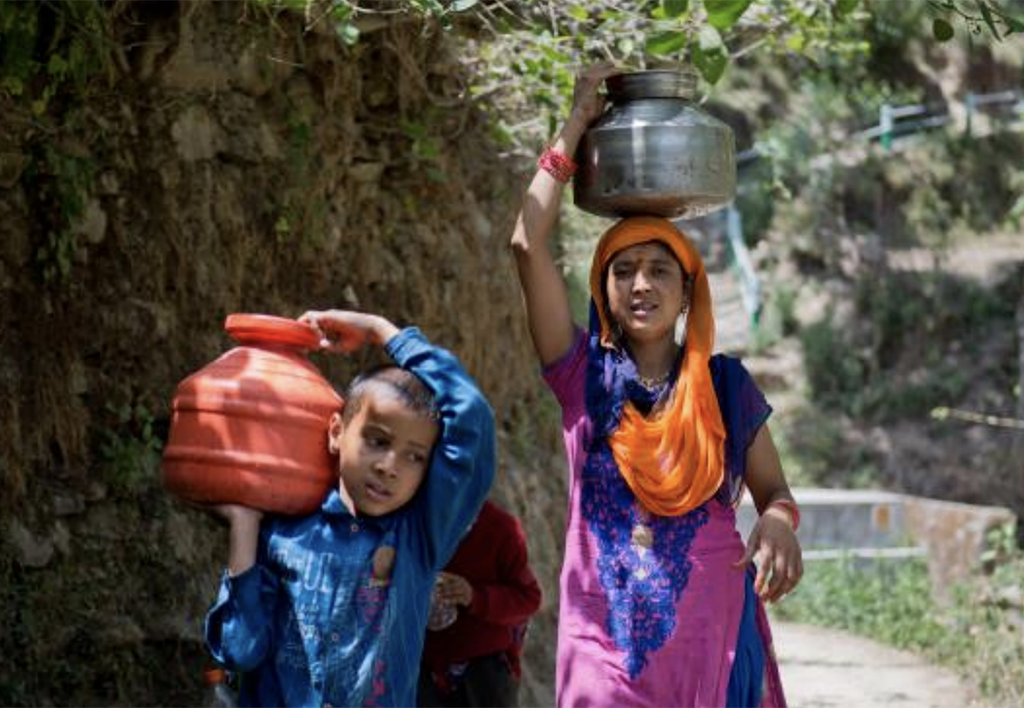
The BalanceD-MERL consortium served as MERL technical experts to the Women + Water Global Development Alliance collaboration among USAID, Gap, Inc., CARE, Water.org, the Institute for Sustainable Communities and the International Center for Research on Women. Together, these organizations are leveraging their complementary strengths to improve and sustain the health and well-being of women and communities touched by the apparel industry. The consortium developed a MERL strategy for the Alliance and captured lessons learned in the following two resources:
- Case Study (PDF) | Executive Summary (PDF)– A document that shares the experience of applying the BalanceD-MERL approach in the Women + Water program and provides key takeaways along with action-items for decision-makers, program implementers, and MERL practitioners to undertake to enhance the effectiveness of this approach.
- Nine action-oriented questions (PDF) that private sector companies can ask to strengthen the design and implementation of their work with USAID.
- Case Study (PDF) | Executive Summary (PDF)– A document that shares the experience of applying the BalanceD-MERL approach in the Women + Water program and provides key takeaways along with action-items for decision-makers, program implementers, and MERL practitioners to undertake to enhance the effectiveness of this approach.
- BalanceD-MERL Maturity Matrix (PDF)
The BalanceD-MERL Maturity Matrix is a tool that can be used by both program staff and MERL staff. It can facilitate program design (D) and implementation through improved performance management and/or evaluation.
Partners